
- September 25, 2025
- By: admin
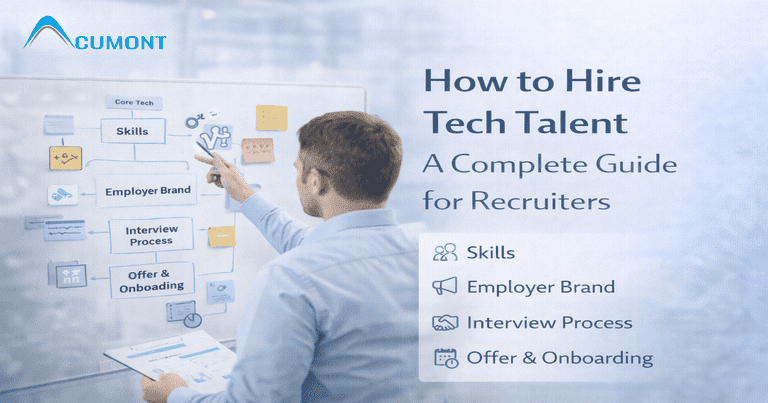
How to Hire Tech Talent: A Complete Guide for Recruiters
Hiring tech professionals today is becoming increasingly challenging. The demand for skilled developers, data scientists, and engineers is at its peak, while the available talent pool struggles to match this need. This ongoing tech talent shortage has resulted in intense competition, rising salary expectations, and slower hiring timelines for many organizations.
According to a 2023 McKinsey report, 87% of companies say they either already face skill gaps or expect to within the next few years, with tech roles being the hardest to fill.
As a recruiter or hiring manager, you’re on the front lines of this challenge. You know that attracting and retaining top-tier tech professionals requires more than just a job ad, it demands a strategic, thoughtful, and candidate-centric approach.
This guide serves as your roadmap. Instead of generic suggestions, we will explore proven strategies to help you build an effective tech recruitment process and position your company as a top choice for skilled technical talent.
Part 1: The Foundation – Understanding the Modern Tech Candidate
Before you can successfully hire tech talent, you must first understand what drives them. This isn’t just about salary anymore; today’s tech professionals are looking for meaningful work, a strong culture, and opportunities for growth.
Who Are You Really Looking For?
The first step is to create a detailed persona of your ideal tech candidate. Go beyond a basic checklist of required skills. A comprehensive profile should include:
- Core Technical Skills: What languages, frameworks, and tools are non-negotiable?
- Problem-Solving Abilities: Can they think critically and solve complex problems, not just write code?
- Soft Skills: Do they work well in a team? Can they communicate technical concepts clearly to non-technical stakeholders?
- Culture Fit: Do their values align with your company’s mission and work environment? Are they adaptable and willing to learn?
Beyond the Salary: What Tech Talent Really Wants
Competitive compensation is essential, but it is rarely the only factor that influences a successful hire. Research and industry surveys show that tech professionals are equally motivated by:
- Growth & Learning Opportunities: Access to training, certifications, conferences, and mentorship programs that support continuous development.
- Autonomy & Impact: Opportunities to contribute meaningfully, innovate, and take ownership of critical projects.
- Work-Life Balance: This includes flexible hours, a healthy remote work policy, and a culture that values well-being.
- Cutting-Edge Technology: Exposure to modern tools, platforms, and problem-solving environments instead of maintaining outdated systems.
In today’s tech industry, professionals seek more than just paychecks, they want growth, autonomy, and a culture that values innovation.
Part 2: How to Hire Tech Talent: 5 Pillars of a Winning Strategy
Building a successful tech talent acquisition strategy requires multiple coordinated efforts. By focusing on these five key pillars, organizations can streamline hiring and gain a competitive advantage.
Pillar 1: Build a Magnetic Employer Brand
Your employer brand is your most powerful tool. It’s the reputation of your company as a place to work, and it’s the first thing a candidate will research. To make your brand stand out:
- Showcase Your Engineering Culture: Use your company blog and social media to highlight your technical teams. Write articles about the cool problems they’re solving, feature engineer spotlights, and share videos of your team in action.
- Be Visible in the Community: Sponsor tech meetups, host hackathons, and encourage your team to speak at conferences. This positions your company as a genuine part of the tech community, not just a consumer of its talent.
- Use Your Employees as Ambassadors: A compelling testimonial from a happy developer is far more persuasive than any marketing copy. Encourage and empower your team to share their positive experiences on social media.
According to Glassdoor, 75% of job seekers are more likely to apply to a company that actively manages its employer brand.
Pillar 2: Master Your Sourcing Channels
Relying solely on job boards is a losing strategy in the current climate. To effectively find tech talent, you must diversify your sourcing channels:
- Employee Referrals: This is often the most effective channel, as referred candidates are more likely to be a good cultural fit and have higher retention rates. Create a robust referral program with meaningful incentives.
- Niche Job Boards & Communities: Instead of general job sites, post on specialized platforms like Stack Overflow, GitHub Jobs, and Reddit subreddits. These platforms allow you to directly engage with candidates where they are.
- Passive Sourcing & Talent Nurturing: Use tools like LinkedIn Recruiter to find passive candidates (those not actively looking for a job). Build relationships over time by sharing valuable content and insights, so that when they are ready to move, your company is top of mind.
Research by LinkedIn shows that referred candidates are 4x more likely to be hired and 45% more likely to stay longer at a company.
Pillar 3: The Art of the Vetting Process
The technical interview process plays a critical role in successful hiring. A poor experience can quickly discourage top candidates. Your process should be efficient, respectful, and accurately assess both technical and interpersonal abilities.
- Pre-Screening: Conduct a quick, initial screening call to assess communication skills and culture fit.
- The Technical Challenge: Move beyond whiteboard interviews that test memorization. Use realistic, take-home coding challenges or a pair-programming session to see how a candidate works on a real-world problem. This provides a truer measure of their skills.
- Behavioral & Soft Skills Interviews: Conduct an interview to assess problem-solving skills, teamwork, and how they handle setbacks. This is crucial for ensuring they can work effectively within your team.
The HackerRank report found that 66% of developers prefer to be evaluated using real-world skills rather than theoretical tests, highlighting the importance of practical assessments over memorization.
Pillar 4: Crafting the Perfect Offer & Nurturing the Candidate
Once you’ve found a great candidate, your work isn’t done. The offer stage is where many companies lose out.
- Be Fast, Be Decisive: Delays at this stage signal indecisiveness and can cost you the candidate. Top talent often has multiple offers on the table, so a swift process is essential.
- Create a Compelling Offer: Your offer should go beyond salary. Clearly outline the compensation package, benefits, stock options, and any perks that align with their stated motivations (e.g., flexible work, professional development budget).
- Nurture, Don’t Abandon: Stay in touch with the candidate between offer acceptance and their start date. Send them a welcome kit, introduce them to their future team, and answer any questions to build excitement and confidence.
Pillar 5: Onboarding for Success
A successful onboarding process is critical for retention and is often overlooked. A poor experience in the first 90 days can lead to a new hire leaving within their first year.
- Prepare Their Environment: Have their laptop, software, and accounts ready to go on day one. Nothing says “we’re not prepared for you” like a new employee waiting around for IT to set up their machine.
- Assign a Mentor: Pair the new hire with a senior team member or a “buddy” who can help them navigate the company culture and answer questions without judgment.
- Set Clear Expectations: Provide a clear project and goals for the first month. This helps them feel productive and valuable from the very beginning.
Part 3: Overcoming Common Roadblocks
Even with the best strategy, you’ll encounter challenges in tech recruitment. Here’s how to overcome some of the most common ones.
- The Tech Talent Shortage: Acknowledge that the skills gap is real. To combat it, focus on building your own talent pipeline through internships, apprenticeships, and internal training programs.
- Hiring Remotely: The rise of remote work has opened up new talent pools. Embrace it. Standardize a robust remote hiring process, invest in communication tools, and create a culture that is inclusive for remote employees.
- Addressing Bias: Unconscious bias can creep into every stage of the hiring process. Implement structured interviews, use blind resume reviews, and standardize your evaluation criteria to ensure you’re judging every candidate fairly.
For a growing startup, adopting flexible hiring models and investing in internal training can help compete with larger enterprises for top talent.
Even after getting hired, 40% of developers plan to leave their company within one year due to factors like pay, career growth, and meaningful work, emphasizing the need to not just hire but retain talent effectively.
Conclusion
Hiring tech talent doesn’t need to be a challenge. With a modern, strategic, and candidate-focused approach, you can transform recruitment into a competitive business advantage.
At Acumont, we understand these challenges because we navigate them every day. We partner with businesses to provide access to a vetted pipeline of top-tier tech talent, streamline their hiring processes, and ensure they build the high-performing teams they need to innovate and grow.
When you approach how to recruit with a candidate-first mindset, you not only hire faster but also retain stronger teams.
FAQs
What are the most effective strategies for sourcing tech talent?
Use employee referrals, niche job boards, and LinkedIn to reach active and passive candidates. Engage in tech communities for visibility.
How can I improve my company’s employer brand to attract top tech talent?
Showcase your team and projects on blogs and social media. Participate in tech events and encourage employees to share experiences.
What are the key components of a successful tech interview process?
Combine pre-screening, practical coding challenges, and behavioral interviews to evaluate skills, teamwork, and cultural fit.
What factors do tech professionals prioritize when considering a job offer?
They value growth, meaningful work, flexible hours, and modern technology. Salary is important but secondary.
